
Francis, Gavronsky, Kin-chong Chao, Lacko, Majumdar, Ruiz
Winter Barley malt in Wisconsin: an opportunity to enhance soil health, increase continuous living cover, and add value to rotations
Hannah Ruth Francis
PhD Candidate, Soil and Environmental Sciences
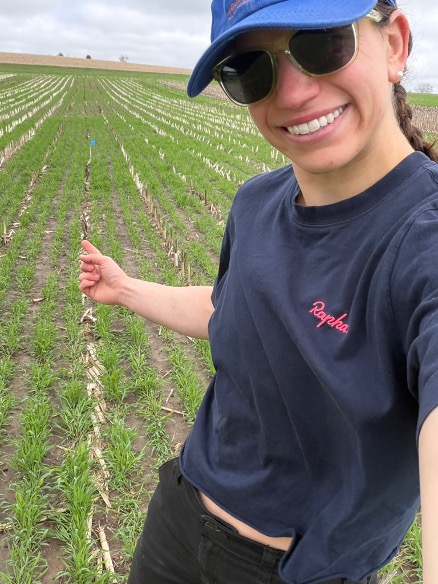
Hannah Francis in a field of emerging small grains. These plants over-wintered, providing essential cover at a vulnerable time for soil and nutrient loss. Could they also be a value-added opportunity for farmers?
Agricultural Finance and Sustainable Futures
Leeza Gavronsky
MS, Nelson Institute of Environmental Studies
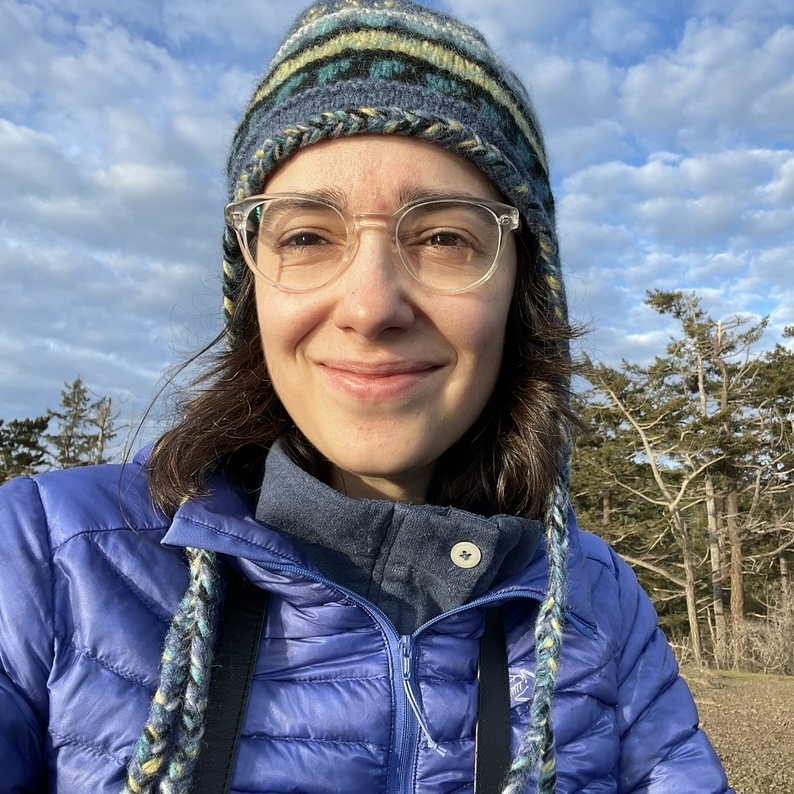
Leeza Gavronsky is a master’s student at the Nelson Institute of Environmental Studies.
Rooted in Care: Land Justice and Queer Community-Making in Hong Kong
Leo Kin-chong Chao
Joint PhD, Human Ecology and Sociology
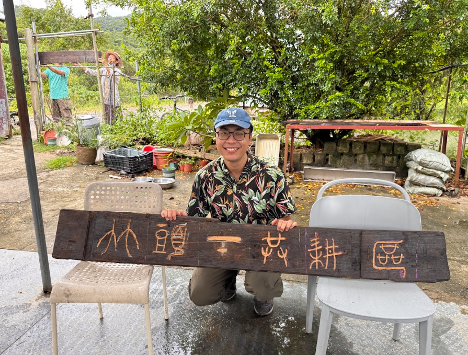
Leo helped craft the wooden header sign for the eco-village in the summer of 2026.
Thailand’s Durian Boom: Understanding Social and Environmental Risks in a Changing Market
Ray Lacko
PhD, Geography
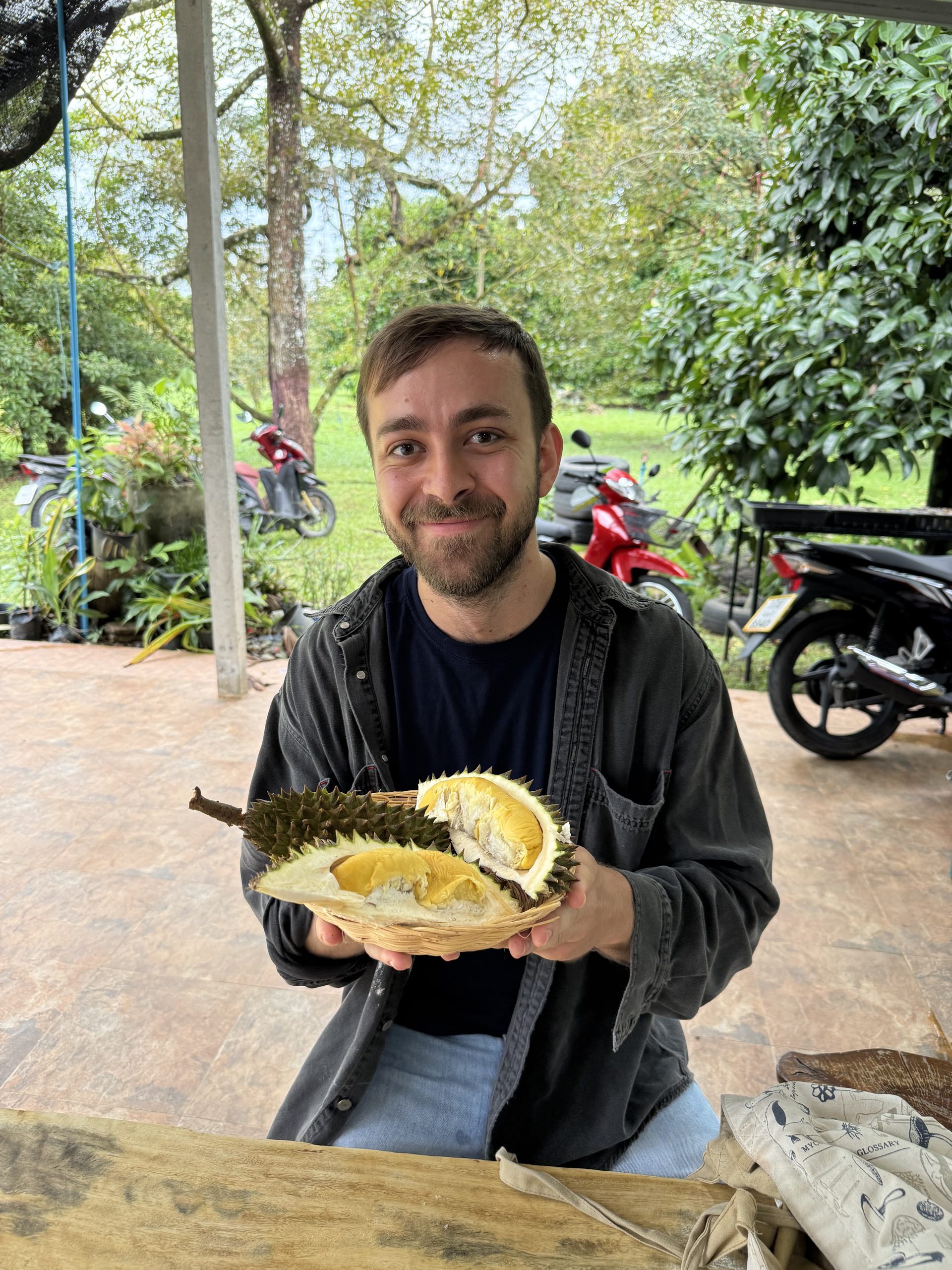
Ray Lacko, a PhD student in the Department of Geography, interviewed Thai durian farmers across central and southern Thailand to better understand the strategies used to grow durian and alternative markets accessible to farmers by region.
Farmland Preservation in Wisconsin: A Stakeholder-based Perspective on Challenges, Motivations, and Incentives
Inder Majumdar
PhD, Agricultural and Applied Economics
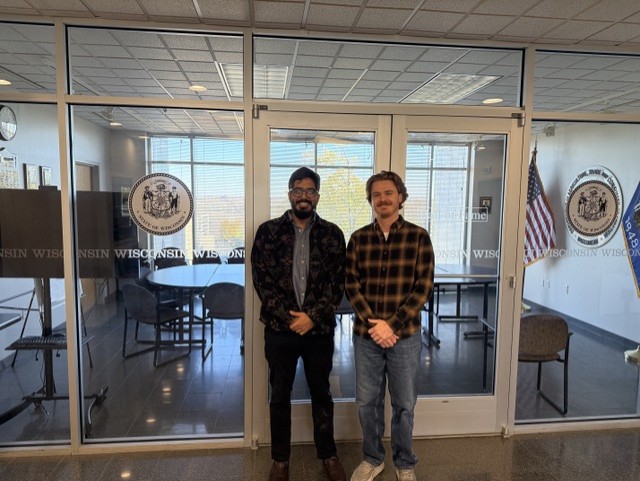
Inder Majumdar, an AAE PhD Student, met to discuss opportunities with Tim Jackson, Agricultural Land Use Specialist for the Farmland Preservation and Livestock Facility Siting programs administered by the Wisconsin Department of Agriculture, Trade, and Consumer Protection.
Exploring management practices, workplace culture the connection to cow welfare in Wisconsin Dairy Farms
Andrea Cristina Ruiz
PhD, Agricultural and Applied Economics
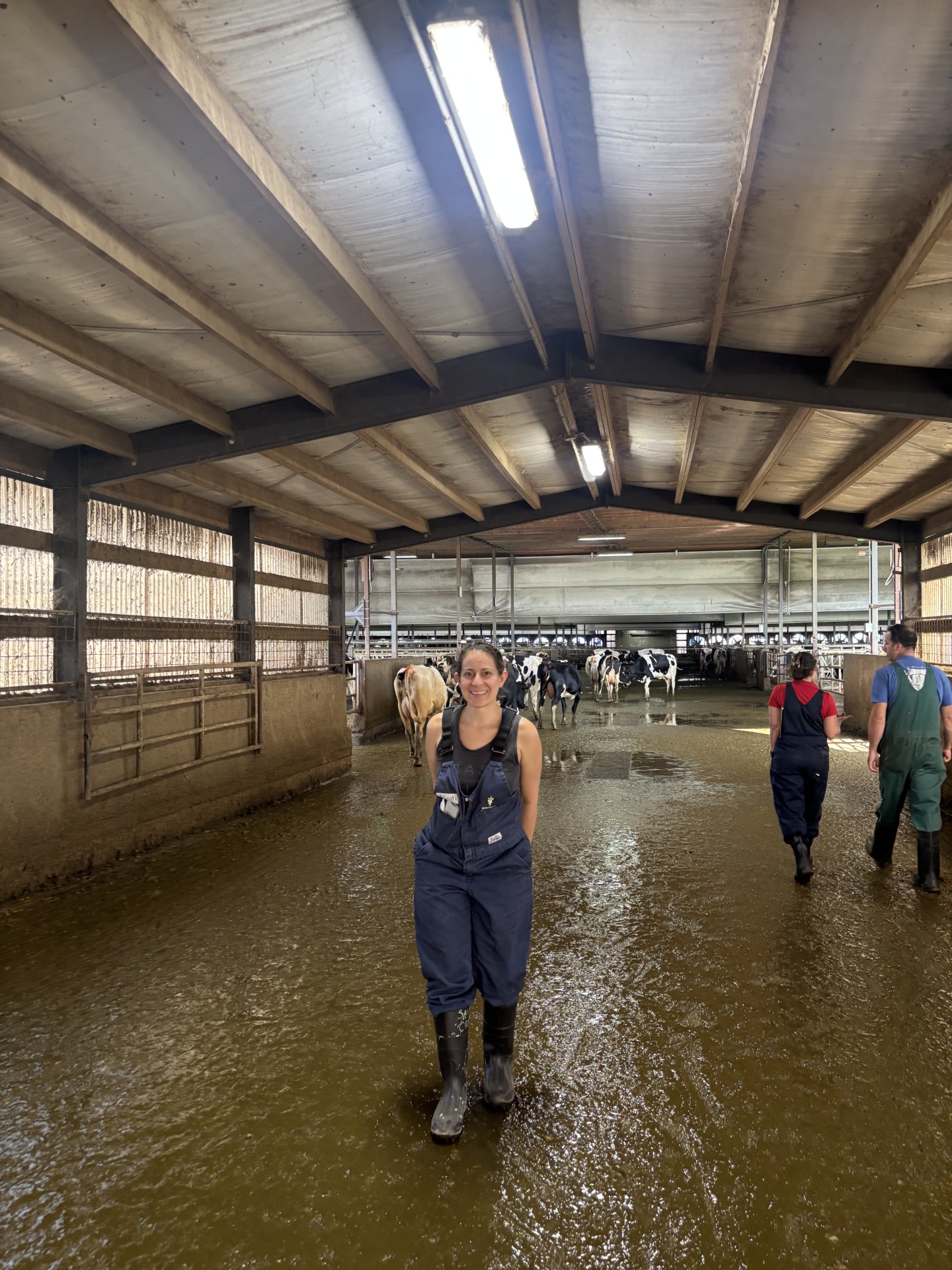
Andrea Cristina Ruiz standing in a dairy farm during summer fieldwork piloting ways of measuring workplace and its relationship herd health.
SUMMARIES
Winter Barley malt in Wisconsin: an opportunity to enhance soil health, increase continuous living cover, and add value to rotations
Student Researcher: Hannah Francis, PhD Candidate, Soil and Environmental Sciences
Faculty Advisor: Matthew D. Ruark, Professor and Extension Soil Scientist, Soil and Environmental Sciences
When we think about protecting our agricultural fields from erosion and nutrient loss, we imagine keeping them covered with living plants. This practice is called cover cropping. What we don’t often imagine is the economic consequence to farmers—how do farmers add value to a practice like cover cropping? Often, cover crops are a small grain, like barley, that farmers plant in the fall, the crop over-winters, and continues to grow into the spring. Over-wintering barley is a crop uniquely suited to add value to fields in Wisconsin if it is grown for the grain. The grain can be harvested and malted, a process which germinates and roasts the grain, for the brewing industry. Currently, there are variety trials to see which winter barley varieties work best both agronomically and for malt quality. This project collaborated with UW Extension, who grew barley varieties, a local craft malt house in Janesville, WI, and Wisconsin brewers and distillers to determine if winter barley provides a viable, malt-quality grain to provide a value-added opportunity for farmers looking to keep their fields covered.
Agricultural Finance and Sustainable Futures
Student Researcher: Leeza Gavronsky, MS, Nelson Institute of Environmental Studies
Faculty Advisor: Michael Bell, Philip David Lowe and Vilas Distinguished Achievement Professor, Community and Environmental Sociology
Despite proven benefits to ecological health and farm profitability, farmers in the U.S. looking to transition away from conventional agriculture risk losing access to critical financial resources. Leeza’s research explores all sides of this financing gap, working with farmers, finance professionals, and third-party experts in southern Wisconsin to explore alternative strategies and ways forward.
These grounded insights will inform her dissertation work comparing the financial strategies of large-scale ecological restoration initiatives around the world that are integrating agricultural lands and communities into new sustainable development paradigms.
Rooted in Care: Land Justice and Queer Community-Making in Hong Kong
Student Researcher: Leo Kin-chong Chao, Joint PhD, Human Ecology and Sociology, Civil Society and Community Studies
Faculty Advisor: Jennifer Gaddis, Professor, Civil Society and Community Studies
I am Leo Kin-chong Chao, a joint PhD candidate in Human Ecology (Civil Society and Community Research) and Sociology. I study environmental movements and how civil society organizations and alternative communities are established to sustain environmental causes, even in times of repression. In particular, I follow several organizations in Hong Kong connected to the Land Justice Movement of the 2000s. I adopt a community-engaged approach, working with my community partners to identify practical challenges and develop solutions collectively. I am also interested in queer ecology and in exploring sustainable, cooperative, and non-heteronormative ways of living in different parts of the world.
Thailand’s Durian Boom: Understanding Social and Environmental Risks in a Changing Market
Student Researcher: Ray Lacko, PhD, Geography
Faculty Advisor: Ian Baird, Professor, Geography
Since the early 2000s, Southeast Asia has experienced a durian boom. Driven by growing demand for the fruit in China, Thailand held a monopoly on fresh durian exports for nearly 2 decades as the only nation legally permitted to export the fruit fresh to China. Throughout the 21st century, Thai farmers have rapidly expanded and industrialized farms to meet Chinese consumer demand, despite the high costs of this farming strategy. Since 2021, a few other neighboring Southeast Asian countries have been permitted to sell fresh durian to China. New competition and Thailand’s rapid growth have led to market saturation over the past 5 years, causing durian prices to fluctuate. As part of a larger dissertation project, this subsection explored the varied practices and alternative markets available to durian farmers in several Thai durian producing provinces. I used qualitative methods, including interviews and participant observation. I conducted fieldwork between May and July on durian farms in central and southern Thailand during the height of the Kingdom’s 2026 durian harvest season. I interviewed farmers managing durian orchards in various ways, including intensive monocrop orchards, mixed orchards, and low-input food forests. Based on my interviews, I found that while many farmers have grown more hesitant about the expensive practices associated with monocropping durian, it remains the most financially lucrative option because of its high yields. Despite this, some farms are partially adopting or resisting monocropping with synthetic inputs. Success varies widely and depends largely on access to alternative markets, such as the Malay-Thai border and consumers in Bangkok. Near the Malay-Thai border, many Thai farmers have found success through trade deals in Malaysia or through attracting tourists from the neighboring country to their farms. In central Thailand, some farms have built all or part of their farming operation around ecotourism to attract consumers from Bangkok. Another option available to all durian farmers in the study was less geographically dependent and involved using Thai Post to ship durian to consumers across Thailand.
Farmland Preservation in Wisconsin: A Stakeholder-based Perspective on Challenges, Motivations, and Incentives
Student Researcher: Inder Majumdar, PhD, Agricultural and Applied Economics
Faculty Advisor: Andrew Stevens, Martin E. and Kathleen M. Burkhardt Associate Professor, Agricultural and Applied Economics
Supported by the CIAS Graduate Student Research Mini-Grant Program and the Single Step Foundation, UW–Madison doctoral student Inder Majumdar interviewed state government personnel and county conservation and planning officials to examine the factors that shape local government and producer participation in Wisconsin’s Farmland Preservation Program. Interviews with officials in Columbia and Green Lake counties highlighted how local implementation balances farmland protection incentives with soil and water conservation oversight requirements. Officials’ accounts also suggested that development pressure and the amenity value residents place on rural landscapes can shape local priorities, independent of individual producer motivations. His exploratory findings underscore the importance of considering administrative demands, conservation outcomes, and local experiences alongside land-use and economic outcomes when evaluating farmland preservation programs.
Exploring management practices, workplace culture the connection to cow welfare in Wisconsin Dairy Farms
Student Researcher: Andrea Cristina Ruiz, PhD, Agricultural and Applied Economics
Faculty Advisor: Corbett Grainger, Professor, Agricultural and Applied Economics
In the summer of 2026, PhD Economics student Andrea Crisina Ruiz partnered with Dr. Solano’s lab in the School of Veterinary Sciences, conducted behavioral economics trust games, developed a field-tested survey, and conducted interviews with dairy farm managers across three farms. The project successfully developed a protocol for conducting trust games in dairy farm settings and a survey that, if scaled, could provide a unique perspective on the combinations of compensation and workplace policies that help attract and retain workers. Survey measures of psychological safety and game-based measures of trust provide visibility into workplace culture. This work lays the foundation for future research exploring how workplace experiences and management practices may relate to cow health and well-being.