
Yentl Deroche-Leydier
Fulbright Scholar
PhD, Sociology
1535 Observatory Drive
Madison, WI 53706
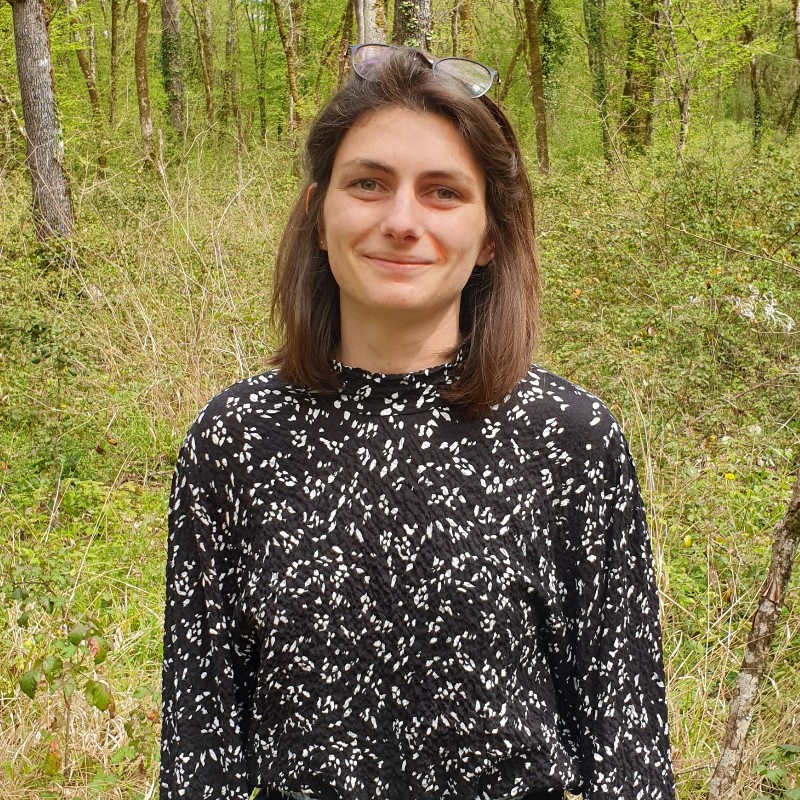
Yentl joins the CIAS as a Fulbright Scholar from France.
Her work focuses on social dynamics during crises. She aims to better understand how farmers cope with the crises of the 2020s, and how their social networks shape not only their coping strategies, but also their transitions toward more equitable and sustainable systems.
She adopts a processual and relational approach: her work seeks to illuminate the social conditions that favor farmer resilience and transitions toward greater equity, while identifying the role of different supply chain actors in these dynamics. A central focus is understanding how crises affect farmers at different moments in time, and how relationships produce different effects over the long term.
Yentl is committed to testing and refining methodological combinations to ensure the most appropriate and rigorous approach to each research question. To this aim, she developed a mixed methods approach, combining quantitative social network analysis with qualitative data collection and interpretation. This combination allows her to identify broad tendencies and then enlighten them with more detailed qualitative data. She particularly mobilize quantified narrative methods, which help measure the effects of specific types of relationships.
Yentl comes from backgrounds in political science and sociology, which I apply to studying the transformation of food systems and understanding the complexity of actors, issues, and dynamics at play, as well as the roles of various stakeholders in addressing environmental challenges.
Yentl’s project aims at studying how the crises of 2020s have shaped farmers’ perceptions of the future and their adaptations in farm organization and distribution.
To do so, she is conducting interviews with farmers and supply chain actors, and combining these with archival analysis of past crises, in order to:
- Identify and describe the effects of the COVID-19 and inflation crises on farm organization and on farmers’ perceptions of crises to come.
- Understand how farmers mobilized their social networks to cope with these crises, and how those networks have since been reconfigured in anticipation of new ones.