
Research, tools, and information on how farmers can build and maintain an economically viable farm business.
Compass tools
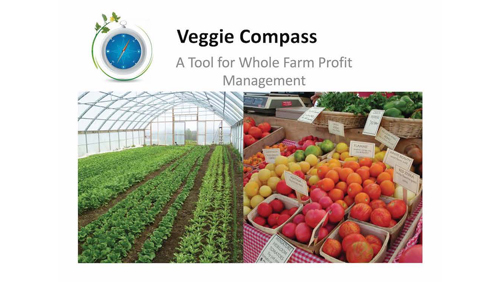
Compass Tools help farmers with data-driven decision-making to become more profitable and sustainable. The CIAS Compass Toolbox contains a suite of whole farm profit management spreadsheet tools to help farmers understand their costs of production, identify what products and markets are best for them, and identify ways to improve profitability. Compass Workshops help train farmers and service providers to use these tools.
Veggie Compass
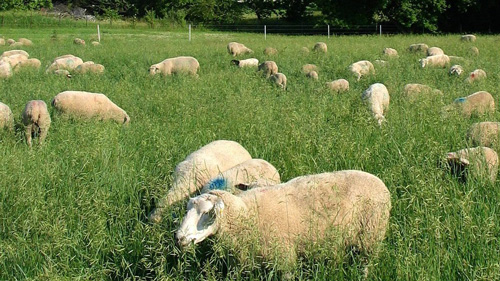
Livestock Compass
Fruit & Nut Compass
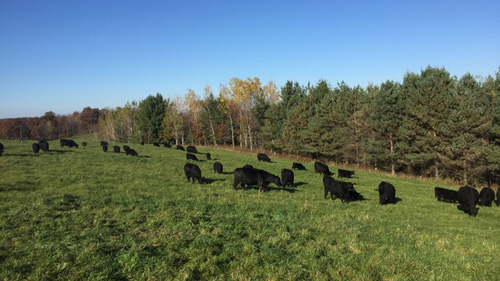
Pasture-Based Beef Enterprise Calculator
OGRAIN Compass – NEW 2023 VERSION
Hemp Compass
Grassland 2.0 Grazing Compass Tools
These tools, built in collaboration with the Grassland 2.0 Program, evaluate a transition from a confinement to a pasture-based system of raising animals. They analyze the financials of the grazing season to estimate cost and labor savings. They help estimate the amount of land needed, paddock establishment and operating costs, and also include an evaluation of the nutritional composition of a feeding plan focused on grazing.
Heifer Grazing Compass
Beef Grazing Compass
PUBLICATIONS AND OTHER RESOURCES
-
Agriculture & Rural Resilience Summit
Date: Saturday, October 21, 2023 – 7:45 to 3:30pm W.R. Davies Student Center, Eau Claire, WI Join the Wisconsin Academy of Sciences, Arts & Letters and the Wisconsin Farmers Union at the Agriculture & Rural Resilience Summit on October 21, 2023, in Eau Claire, WI. This one-day event is a transformative platform for stakeholders to…
-
A Deep Dive Into Soil Health with Jamie Patton
Free! Tuesday, September 6th, 2023 – 1:30pm-3:30pm Starry Nights Farms 7500 352nd Avenue, Burlington, WI 53105 Dive deep into soil health with Jamie Patton of the USDA. See a rainfall simulation and meet the Kenosha County Regenerative Producers, a new farmer-let watershed protection group. A light lunch will precede the field day. Register here!
-
Grazing Field Day at Red Line Ranch
Free! Wednesday, September 6th – 10:00am-1:30pm Red Line Ranch Matt and Sarah Winker 2513 Co. Hwy A, Belgium, WI, 53004 Join Ozaukee County Demo Farm Network at Red Line Ranch for an in-depth pasture walk. They will be covering topics like: starting a grazing system, pasture and fence establishment, and multi-species grazing. Matt and Sarah…
CIAS PARTNERS
Organic Grain Resource and Information Network (OGRAIN)
Ellen Polishuk, Plant to Profit
Jim Munsch, Deer Run Farm
NEWS
These tools, built in collaboration with the Grassland 2.0 Program, evaluate a transition from a confinement to a pasture-based system of raising animals. They analyze the financials of the grazing season to estimate cost and labor savings. They help estimate the amount of land needed, paddock establishment and operating costs, and also include an evaluation of the nutritional composition of a feeding plan focused on grazing.
- Graduate Assistantship at University of Wisconsin- Madison: “Intertribal Foodways in the Great Lakes Region”Graduate Assistantship Opportunity – UW–Madison A two-year Graduate Assistantship is available at the University of Wisconsin–Madison starting in Summer or Fall 2027. Funded by the USDA/NIFA Sustainable Agriculture Systems (SAS) grant, “Intertribal Foodways in the Great Lakes Region,” this position is housed within the College of Agricultural & Life Sciences. Based in Madison, the selected… Read more: Graduate Assistantship at University of Wisconsin- Madison: “Intertribal Foodways in the Great Lakes Region”
- CIAS Staff Volunteer at Green Offices Go Outside Event for Earth FestThe third annual Green Offices Go Outside event partnered with the Lakeshore Nature Preserve for a volunteer work party during Earth Fest. CIAS Administrative Specialist Frankie Anderson Fulbright Fellow Véronique De Herde took the bus on Saturday, April 18, 2026 to the Lakeshore Nature Preserve to help clear an area of garlic mustard. Garlic mustard… Read more: CIAS Staff Volunteer at Green Offices Go Outside Event for Earth Fest
- Do Farmers Markets Build Community? New Research Says YesUW–Madison Extension Specialist, LSC Professor, and CIAS Faculty Associate Bret Shaw shares recent research highlighting how farmers markets strengthen community well-being. Read the entire article on Project for Public Spaces by clicking the below link:
- AI tools for democratizing food networks: scaling national, regional and localwith Dr. Song Gao, Michelle Miller and Dr. Alfonso Morales,University of Wisconsin Madison, May 21, 2026 The University of Wisconsin-Madison hosted a collaborative web presentation detailingthe development of artificial intelligence (AI) and cyberinfrastructure tools designed todemocratize food networks. Led by Alfonso Morales, a Vilas Distinguished AchievementProfessor in the Department of Planning and Landscape Architecture, the… Read more: AI tools for democratizing food networks: scaling national, regional and local
- Who Shops at Farmers Markets in the US?Who shops at farmers markets? In a new article in The Conversation U.S., CIAS Faculty Associate and Professor Bret Shaw (Life Sciences Communication and Division of Extension), summarizes who shops at farmers markets based on a larger national survey of U.S. residents in a USDA-funded study with implications for marketing and outreach. Read the article here:… Read more: Who Shops at Farmers Markets in the US?