
OVERVIEW
Led by The Ohio State University, the U.S. National Science Foundation funded AI institute for Intelligent Cyberinfrastructure with Computational Learning in the Environment (ICICLE) builds the next generation of Cyberinfrastructure so that Artificial Intelligence (AI) is more accessible to everyone and drive its further democratization in the larger society.
The widespread adoption of Artificial Intelligence (AI) fueling advances in science, education, and commerce has been driven not only by the ability to aggregate data from a wide range of sources, but also by the availability of increasingly powerful Cyberinfrastructure (CI) supporting AI advances. As CI becomes more complex and heterogeneous, end users of the technology face a bewildering set of choices in applying AI to leverage insightful analytics, modeling complex systems, or enabling automation. Issues of data sovereignty, societal benefits and costs, and technology governance are at the forefront.
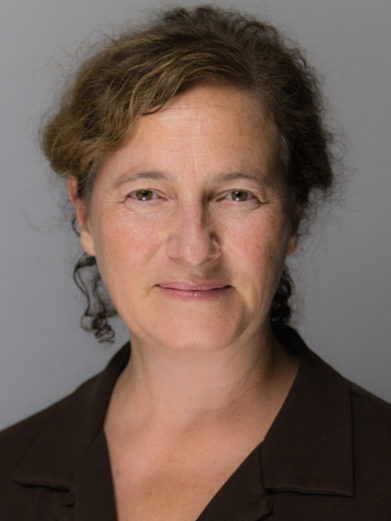
Michelle Miller is a part of the food systems team based
on the Madison campus. She works with Song Gao in Geography and Alfonso Morales in Planning and Landscape Architecture. Song is leading national scale. Michelle investigates the regional scale and Alfonso works at the community scale.
AI for Food Systems
Food companies have collected large amounts of data at the cash register since the 1990s. These data, coupled with AI tools, are used to understand our buying habits, manage warehouses and determine logistics to inform business decisions and ultimately ensure their businesses are profitable. These same tools are inaccessible to small and medium-sized, independent businesses, urban and regional planners, and policy makers whose goals are in the public interest: food access for rural and urban communities, market access for small wholesale farmers and processors, and optimized food flow at the national level. Our work aims to even this playing field to improve market and food access for Wisconsin and the Nation.
We are hosting webinars to showcase the work of researchers interested in the same topics. Read webinar summaries for Spring 2026 and look for more in Fall! The first four webinars featured Marco Formentini at the University of Trento, Italy; Deniz Berfin Karakoc at Arizona State University; Kushank Bajaj at the United Nations Food and Agriculture Organization; and our UW Madison team.