What are grainsheds and why do they matter?
The Midwest was once considered America’s breadbasket. Today, the agricultural landscape is defined by corn and soybeans, the majority of which are sold to consolidated industrial processors and made into animal feed and fuel. Most of the grain on our plates is imported or produced in the Great Plains states and transported long distances before reaching grocery store shelves. Re-localizing grain supply chains and incorporating a variety of food-grade grains within crop rotations offers a more resilient alternative to simplified cropping systems, provides opportunities for diversified farm income, and supports a more robust regional food system.
There is growing consumer interest in and demand for local grains and wholesale buyers are increasingly looking to source locally grown food. A movement of farmers, millers, bakers, brewers, and others have grown to heed the call for the re-introduction of local grains, often describing these local and regional supply chains as a “grainshed”. Similar to a foodshed, the concept of a grainshed can provide a framework to understand and evaluate the space in which localized food systems exist. As modern regional grain value chains are young, this is an opportune moment to dig deeper into “grainsheds” alongside the actors within them and networks that support them.
What is a regional “Grainshed”
we will collectively define a “grainshed” with key stakeholders
How is it measured?
we will Create a tool to measure its performance through key indicators
What are examples of successful business models of localized grain supply chains?
We will study three types of business models: vertical integration, cooperative development, and a disaggregated value chain approach
Our project
CIAS has partnered with the Artisan Grain Collaborative and grainchain coordinators from across the United States to define, evaluate, and showcase regional grainsheds.
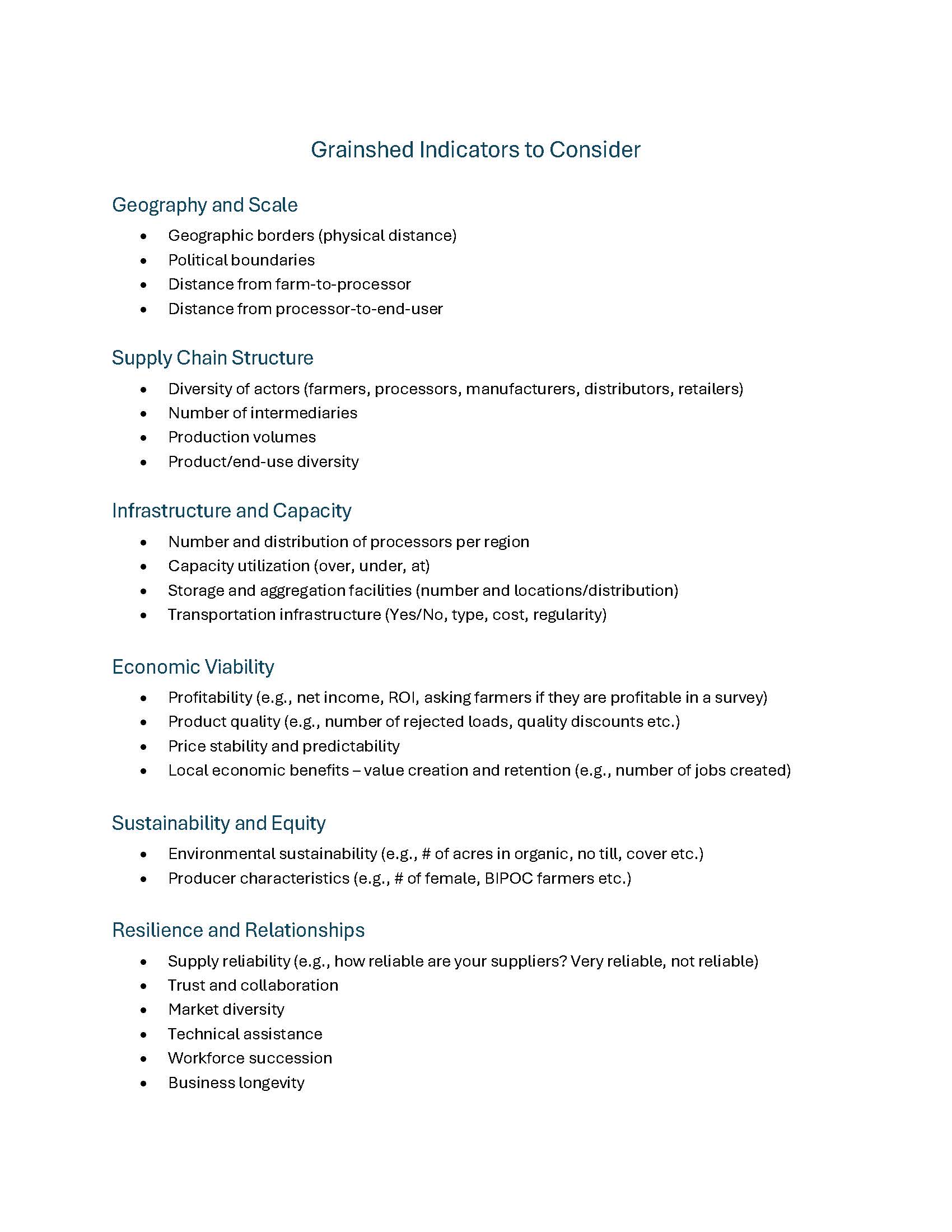
Working with grainchain coordinators and our Project Advisory committee of farmers, processors, and end-users, we will develop a shared definition of the grainshed and indicators for an evaluative tool to measure regional grainshed performance. To understand the state of the grainshed in the Upper Midwest, create a baseline of information through which to measure progress, and exemplify the use of the evaluative tool as a model for others, the research team will apply the evaluative tool to grainsheds in the states of Iowa, Illinois, and Wisconsin. Alongside this work, we will be creating case studies highlighting various supply chain arrangements and successful business models of localized grain supply chains.
Our goal is that the project results, recommendations, and outreach will lead to 1) increased understanding of grainsheds and the state of the Midwest grainshed, 2) application of the evaluative tool to measure the status and progress of grainshed development in other regions and establish goals for grainshed development, and 3) increased knowledge of economically viable supply chain arrangements for local grains and subsequently enhanced profitability and longevity of grain value chain businesses. This work will inform farmer and processor education and outreach as well as policies, programs, and more strategic investments to support regional grainshed development. Ultimately, the project will strengthen the viability of Midwest grain farmers, processors, and food and beverage end-users, creating more resilient communities and food systems across the Upper Midwest.
Below are our project resources and activities for our upcoming grainshed convening.
PDF handouts
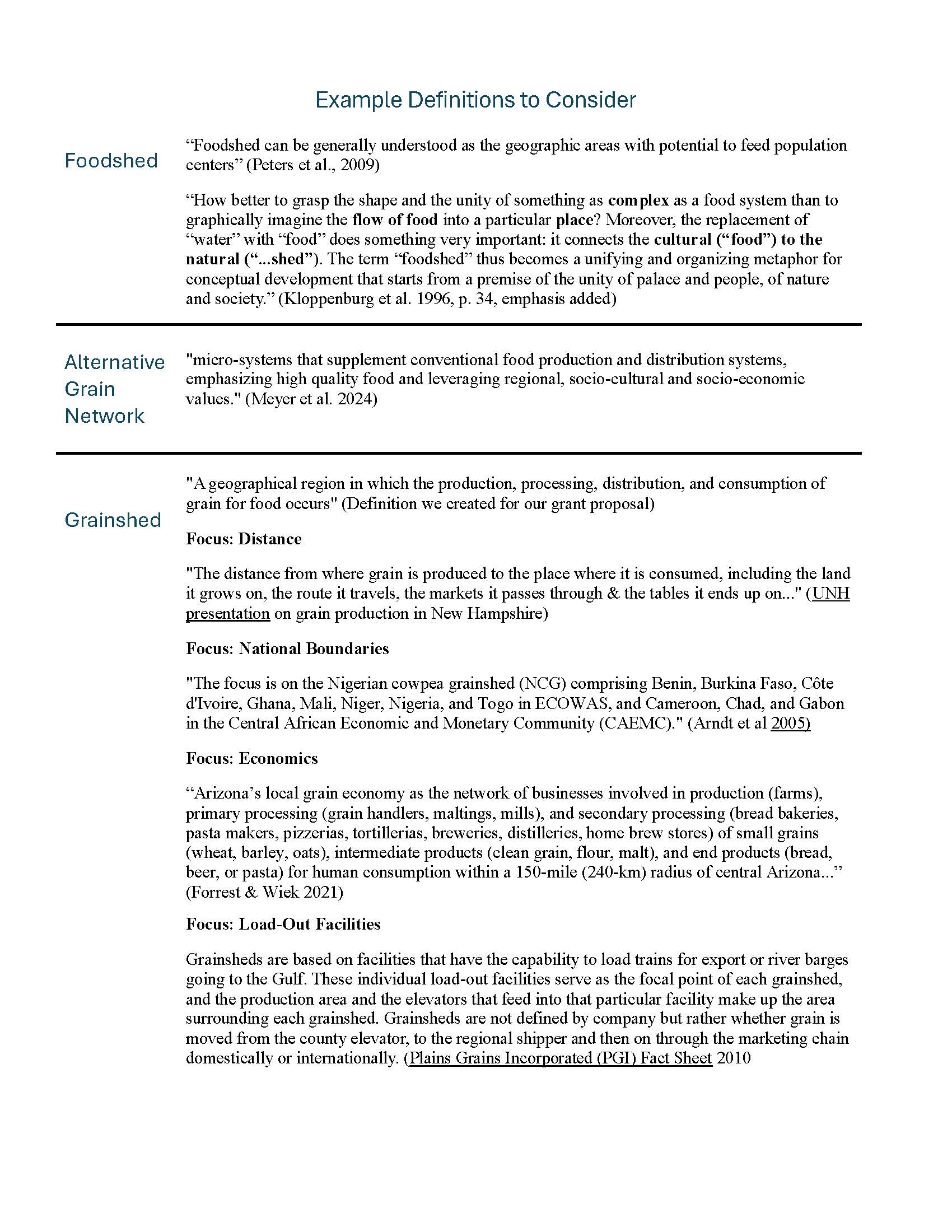
We have compiled a list of example definitions for a grainshed, based on various criteria (distance, national borders, economics, etc.), guided by definitions that have guided work on foodsheds and alternative grain networks. We also have a working list of indicators for evaluating the health and opportunities of regional grainsheds.
Activity links
In order to surface starting themes, we will use a Word Cloud to collaboratively answer the question “what do you think of when you hear the word grainshed?” We will also use a Miro stickie-note activity to kickstart the brainstorming of the indicators needed for an effective evaluative tool assessing the health and opportunities of regional grainsheds.

This material is based upon work that is supported by the National Institute of Food and Agriculture, U.S. Department of Agriculture, under agreement number 2025-38640-45386 through the North Central Region SARE program under project number LNC25-512. USDA is an equal opportunity employer and service provider. Any opinions, findings, conclusions, or recommendations expressed in this publication are those of the author(s) and should not be construed to represent any official USDA or U.S. Government determination or policy.