
Expanding Opportunities for Farmers, Consumers, and Rural Communities
The Diverse Corn Belt Project (DCB) explores the real-world impacts of diversified farming systems.
Our hypothesis—backed by extensive data we’ve gathered during the last four years—is that greater diversity in crops, livestock, and people in the Corn Belt farming community will improve risk management options, resilience, and profitability.
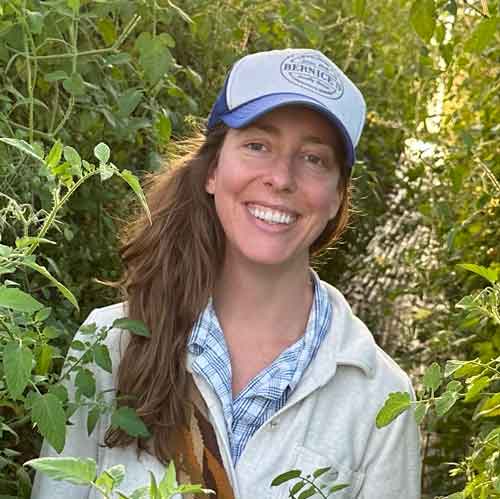
Lauren Asprooth is a co-PI on this large, interdisciplinary USDA SAS CAP project studying how to support a transition to diverse agricultural systems beyond only corn and soybeans.
ENHANCING RURAL RESILIENCE
For decades, farmers in America’s Corn Belt have become world-class specialists in producing millions of tons of corn and soybeans. In 2024, farmers in the DCB focus states of Indiana, Illinois, and Iowa harvested 5.9 billion bushels of corn, 1.6 billion bushels of soybeans, and 13.2 million tons of silage on 55.5 million acres.
In biological systems—and economic and social ones—resilience is rooted in diversity. DCB explores opportunities for and barriers in adding more crops and grazed livestock to rotations in the Corn Belt, seeking concrete options for diversification and understanding the agronomic, economic, social, infrastructure and policy changes that could make them viable.
The DCB Team, funded by USDA’s National Institute of Food and Agriculture, has entered the final year of an intensive five-year exploration of diversity options for the Corn Belt states of Indiana, Illinois, and Iowa.